Homemade Croissants Step By Step
Highlighted under: Sweet Comfort Bakes
I love the experience of making croissants at home; it's a journey that requires patience and care but yields the most satisfying results. Each bite reveals layers of buttery goodness that you just can’t get from store-bought options. The transformation of simple ingredients into flaky, golden pastries is truly magical. I’ve learned that the key is to manage the dough temperature carefully, ensuring it’s cool enough to handle without melting the butter. The reward is a fresh batch of croissants that make mornings feel a little more special.
When I first attempted to make croissants, I was astounded by the precision required. I found that keeping the dough cool between folds was essential for achieving that flaky texture we all love. Each fold creates those beautiful layers that are the hallmark of a perfect croissant. I also realized that a good quality butter makes a noticeable difference in taste.
Through trial and error, I discovered the importance of a resting period for the dough. Allowing it to chill between rolling, not only helps in managing the temperature but also lets the gluten relax, making it easier to roll out the dough into thin sheets. The results? Croissants that are crispy on the outside and soft on the inside, every time!
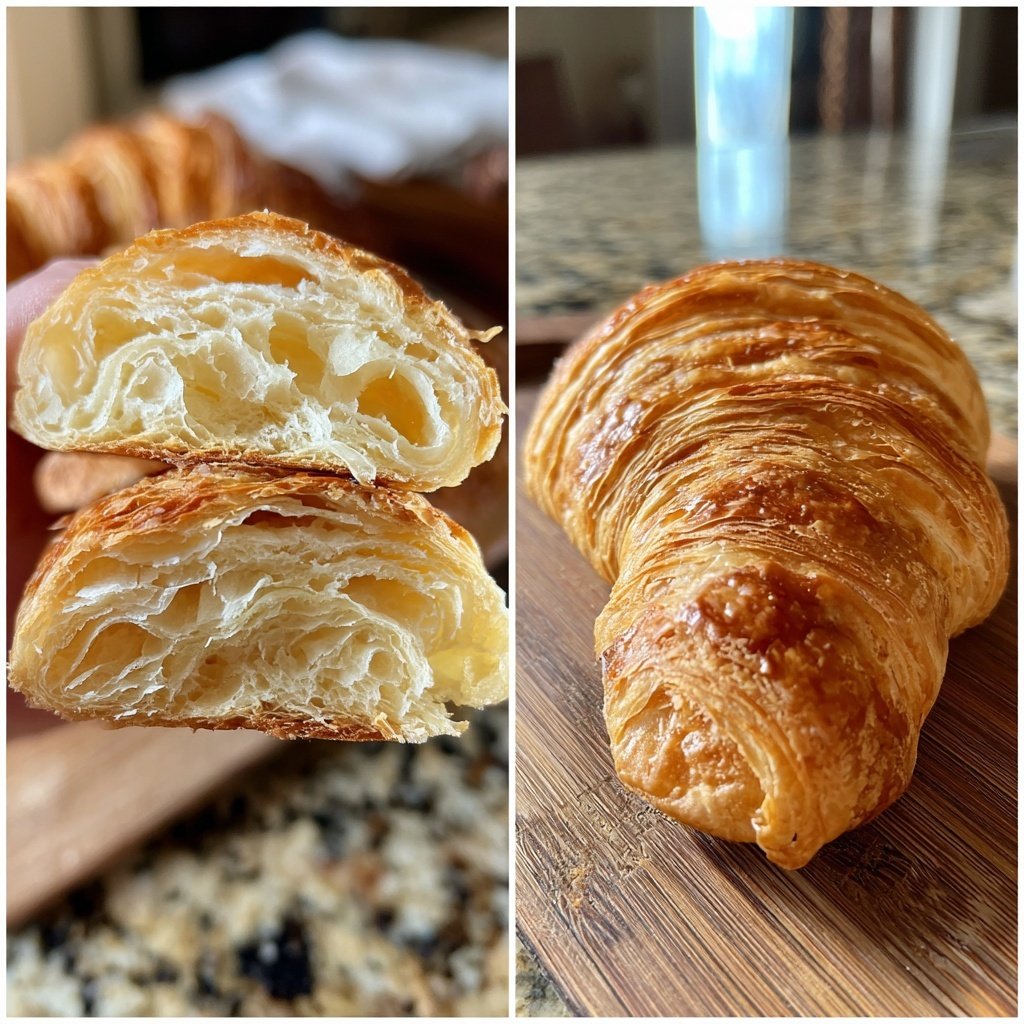
Why You'll Love This Recipe
- The satisfaction of baking from scratch and perfecting your technique
- Flaky layers that are best enjoyed fresh out of the oven
- The aroma of baking croissants that fills your home with warmth
Understanding the Dough
The dough is the foundation of your croissants, and its texture plays a crucial role in the final product. Using cold ingredients is vital; it ensures that the butter stays solid while you work with the dough, which is what creates those flaky layers. I recommend using a digital scale for precise measurements, as even slight variations can affect the dough's hydration and resulting texture.
Kneading the dough until it's smooth and elastic is essential, as this develops the gluten, providing structure. You should knead for about 8-10 minutes by hand or 5-7 minutes in a stand mixer. Look for a glossy surface and a dough that springs back when pressed. If the dough is too sticky, keep a little extra flour nearby, but be cautious not to add too much.
Mastering the Butter Layer
The butter layer is what gives croissants their signature flakiness. Use high-quality, unsalted butter for the best flavor and texture. Ensure the butter is cold and correctly formed into a rectangle; this is critical for even layering. If your butter starts to soften while working, return it to the fridge immediately to maintain its firmness.
When rolling out the dough, aim for a thickness of about 0.5 cm. It's important to roll evenly to prevent any tears, which could compromise the butter layer. If you encounter any sticking, lightly dust your work surface and rolling pin with flour, but be careful not to add too much, as this can affect the dough's ability to rise.
Shaping and Baking Perfect Croissants
Shaping the croissants is not just about aesthetics; it's also vital for how they rise and cook. When cutting the triangles, make them at least 10-12 cm at the base to allow for a proper roll. Make sure to stretch the dough slightly as you roll to create tension; this will help them rise high during baking.
After shaping, the rise is key—allow the croissants to puff up at room temperature until nearly doubled in size, which can take anywhere from 1 to 2 hours. To check readiness, gently poke a croissant; it should spring back slowly. During baking, keep an eye on the color; a golden brown is your indicator of perfection. Each oven is different, so don't hesitate to adjust the baking time slightly based on your results.
Ingredients
For the dough:
- 500g all-purpose flour
- 12g salt
- 50g sugar
- 10g instant yeast
- 300ml cold water
- 40g unsalted butter, softened
For the butter layer:
- 250g unsalted butter, cold and in a block
For egg wash:
- 1 egg
- 1 tbsp milk
Steps
Make the Dough
In a large bowl, mix the flour, salt, sugar, and yeast. Add the cold water and softened butter, then knead until smooth. Shape the dough into a ball and wrap it in plastic wrap. Refrigerate for 30 minutes.
Prepare Butter Layer
Place the cold butter between two sheets of parchment paper. Use a rolling pin to flatten it into a rectangle about 1cm thick. Chill again for 15 minutes.
Combine Dough and Butter
Roll out the chilled dough into a rectangle about twice the size of the butter layer. Place the chilled butter in the center and fold the dough over it, sealing the edges.
Create Layers
Roll out the dough into a long rectangle. Fold it into thirds (like a letter) and refrigerate for 30 minutes. Repeat this process two more times.
Shape Croissants
Roll the final dough into a large rectangle, then cut it into triangles. Starting from the wide end, roll each triangle into a croissant shape.
Let Rise and Bake
Place the shaped croissants on a baking tray lined with parchment paper. Allow them to rise at room temperature for 1-2 hours. Preheat the oven to 200°C (400°F). Brush with egg wash and bake for 20-25 minutes until golden brown.

Pro Tips
- For best results, use high-quality French butter. Make sure your workspace is cool to prevent the butter from melting into the dough.
Common Troubleshooting Tips
If your croissants aren't rising properly, it could be due to the yeast. Ensure your yeast is fresh and active; a simple test is to add it to warm water with a bit of sugar. If it doesn't bubble up within 10 minutes, it’s best to start with fresh yeast.
Another common issue is butter leakage during baking. This often happens if the butter layer has softened too much while rolling. If you notice this happening, try chilling the dough for 10-15 minutes in the fridge before continuing. Chilled dough will hold its shape better during baking.
Storage and Reheating
Croissants are best enjoyed fresh but can be stored in an airtight container at room temperature for up to two days. If you want to keep them longer, consider freezing them. Once your croissants are shaped but before the final rise, you can freeze them. Just ensure they are well-wrapped with plastic wrap and then placed in a freezer bag; they’ll keep for up to a month.
To reheat, place the frozen croissants in the fridge overnight, then let them rise for about an hour before baking as usual. If you’re in a hurry, you can bake them directly from the freezer; just add a few extra minutes to the bake time to ensure they cook through.
Creative Variations
Feel free to get creative with your croissants! Add ingredients like chocolate, almond paste, or ham and cheese for different flavor profiles. When making chocolate croissants, place a piece of chocolate in the center before rolling, or sprinkle almond slivers before baking for a nutty finish.
You can also experiment with the dough itself by incorporating herbs like rosemary or garlic powder for a savory touch. Just ensure that any added ingredients are balanced so they don’t overpower the buttery flavor of the pastry. These small tweaks can elevate your croissants and impress anyone lucky enough to enjoy them!
Questions About Recipes
→ Can I use whole wheat flour instead of all-purpose flour?
Yes, but it may result in denser croissants. You can also mix whole wheat flour with all-purpose flour for a lighter texture.
→ How do I store leftover croissants?
Store them in an airtight container at room temperature for up to 2 days or freeze them for longer storage.
→ Can I make the dough ahead of time?
Absolutely! You can refrigerate the dough for up to 24 hours before rolling it out. Just remember to perform the folds before baking.
→ What can I do if my dough is too sticky?
Sprinkle a little flour on your work surface and your hands. If it persists, you may need to add a small amount of flour during kneading.
Homemade Croissants Step By Step
Created by: Naomi Clarke
Recipe Type: Sweet Comfort Bakes
Skill Level: Intermediate
Final Quantity: 12 croissants
What You'll Need
For the dough:
- 500g all-purpose flour
- 12g salt
- 50g sugar
- 10g instant yeast
- 300ml cold water
- 40g unsalted butter, softened
For the butter layer:
- 250g unsalted butter, cold and in a block
For egg wash:
- 1 egg
- 1 tbsp milk
How-To Steps
In a large bowl, mix the flour, salt, sugar, and yeast. Add the cold water and softened butter, then knead until smooth. Shape the dough into a ball and wrap it in plastic wrap. Refrigerate for 30 minutes.
Place the cold butter between two sheets of parchment paper. Use a rolling pin to flatten it into a rectangle about 1cm thick. Chill again for 15 minutes.
Roll out the chilled dough into a rectangle about twice the size of the butter layer. Place the chilled butter in the center and fold the dough over it, sealing the edges.
Roll out the dough into a long rectangle. Fold it into thirds (like a letter) and refrigerate for 30 minutes. Repeat this process two more times.
Roll the final dough into a large rectangle, then cut it into triangles. Starting from the wide end, roll each triangle into a croissant shape.
Place the shaped croissants on a baking tray lined with parchment paper. Allow them to rise at room temperature for 1-2 hours. Preheat the oven to 200°C (400°F). Brush with egg wash and bake for 20-25 minutes until golden brown.
Extra Tips
- For best results, use high-quality French butter. Make sure your workspace is cool to prevent the butter from melting into the dough.
Nutritional Breakdown (Per Serving)
- Calories: 300 kcal
- Total Fat: 20g
- Saturated Fat: 12g
- Cholesterol: 60mg
- Sodium: 120mg
- Total Carbohydrates: 25g
- Dietary Fiber: 1g
- Sugars: 4g
- Protein: 5g